The Nokalakevi hot spring is a place where thermal water comes out of the ground right onto the pebble bank of the Tekhura mountain river. It leaves the borehole at 60-80°C, runs down to the river in hot streams and mixes with the cool current, so everyone finds water to their taste: from a scalding "shower" to a warm pool. People bathe here all year round, and winter is the best part. Here is how the place works, what the baths cost and why you should not come without your return transport arranged.
Table of contents
What the Nokalakevi Spring Is Known For
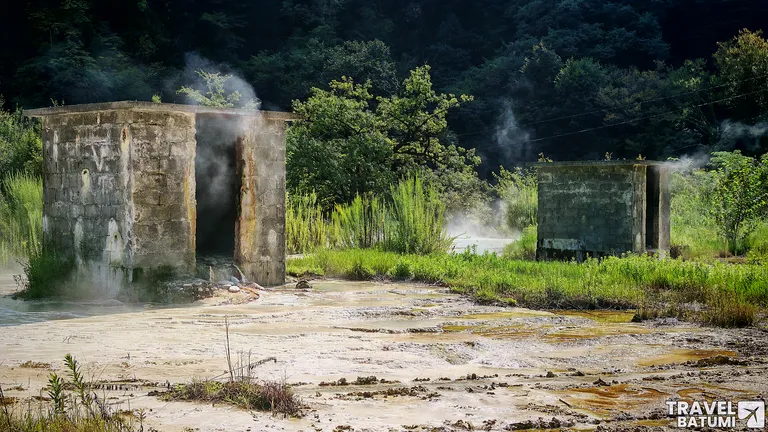
The spring is in Samegrelo, by the village of Nokalakevi, and has been known since the days when Roman baths operated in the fortress next door. It goes by several names, and all of them appear in guidebooks and on maps: Nokalakevi after the village, Tekhura after the river, Betlemi after the local name of the site; it is called a hot spring, a sulfur spring and a thermal spring, and it is always the same place on the bank of the Tekhura. The hydrogen sulfide water comes out of a borehole and over the decades has coated the stones with rusty mineral deposits, and you smell the sulfur before you see the water. This is not a resort with pools and sun loungers but a natural spot by the river: steam over the pebbles, hot rivulets underfoot and the green slopes of the gorge all around.
The main feature is hot and cold side by side. The thermal water is its own, the river water is its own, and there are literally a couple of steps between them: you warm up until it gets too hot, then dip into the mountain river. In summer the Tekhura warms up to a perfectly swimmable temperature, and contrast rounds of "spring - river" become the main entertainment.
How People Bathe Here: Jets, Baths and the River
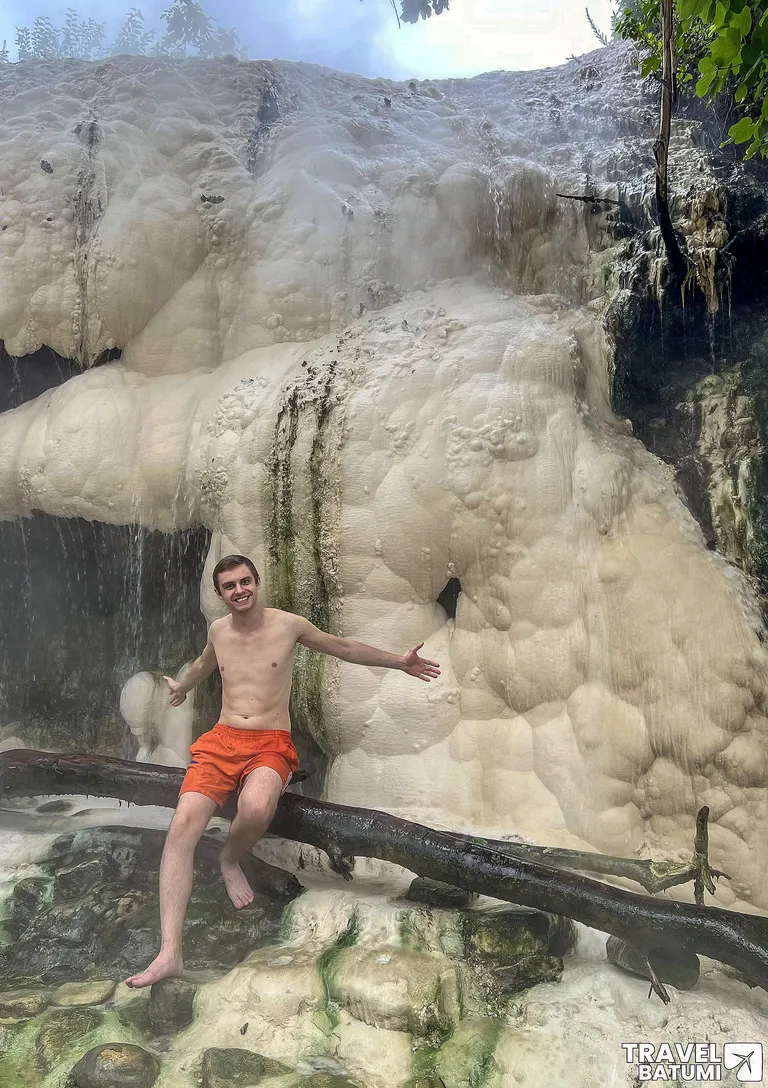
There are three options, all in one place. The first is to sit under the jets themselves: the hot water falls off a rock ledge as a small dripping waterfall, the local version of a hydromassage. Fair warning, for some people the jets are too hot, nobody sits under them for long.
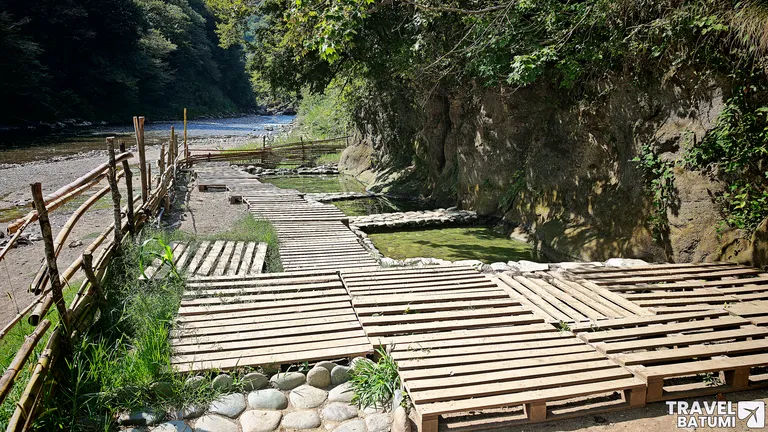
The second option is the equipped balneological baths with a comfortable water temperature. They are paid: 5 GEL for 20 minutes, and this is the most predictable way to take the procedure if a scalding "shower" is not for you.
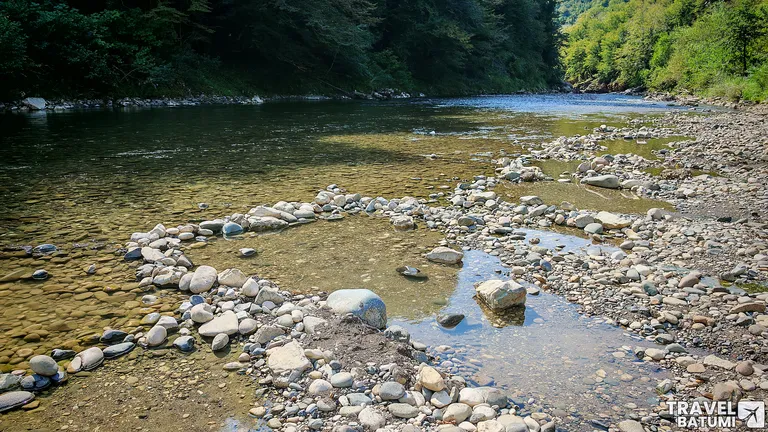
The third and most popular option is the natural pools: small hand-dug hollows in the pebbles by the river, where the hot spring water mixes with the cool river water. The temperature in them comes out mild, you can lie there for a long while, and listening to the Tekhura in the meantime is a pleasure of its own. After the drive from Batumi such a bath relaxes better than any spa.
Benefits of Sulfur Water: What Is Known
Hydrogen sulfide waters are traditionally used for joint and back problems, skin conditions and general relaxation; Soviet balneology was built on this, and so is the spring's reputation with locals, who come here from Senaki and Martvili to "warm up the back".
The caveat we always make: there are no rigorous modern studies of this particular spring, and hot sulfur baths have contraindications, from heart conditions to pregnancy. If you are coming to treat something rather than to relax, talk to a doctor first. For a healthy person simple rules are enough: enter the hot water gradually and do not stay in it longer than 15-20 minutes per session.
Facilities and Prices
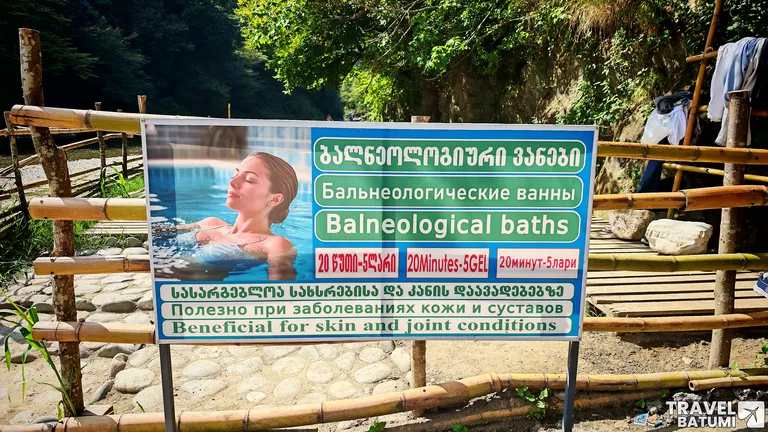
The spring itself is free, money is only needed for the facilities:
| Service | Price |
|---|---|
| Balneological bath | 5 GEL for 20 minutes |
| Toilet | 1-2 GEL |
| Changing room | 1-2 GEL |
There are no cafes, shops or stalls nearby, bring your own food and water. Carry cash in small notes, card terminals are unheard of here. And the main thing to know in advance: mobile signal and internet barely work in this area even with a local SIM. Making a call, opening a map or ordering a taxi through an app will most likely fail, so plan your way back before you arrive.
Where It Is and How to Get There
The spring is on the bank of the Tekhura by the village of Nokalakevi, coordinates 42.365803, 42.195395. From Batumi it is about 130 km and 2.5-3 hours, from Kutaisi about 50 km and an hour on the road; the nearest town is Senaki, 20 minutes away.
By Car
The route from Batumi: the highway towards Poti and Senaki, then the Nokalakevi sign and the road along the Tekhura. For a trip like this it is convenient to rent a car through Localrent: on the way you can easily add Martvili and Senaki, and the schedule depends only on you.
By Car with a Driver
With no mobile signal at the spring, this is the most sensible option if you have no car of your own: a transfer with waiting time on GoTrip.ge on a "city - spring - city" route at a fixed price per car. The driver waits while you bathe, and the problem of "how to call a taxi back with no internet" disappears by itself. A regular taxi one way is cheaper, but the return has to be arranged in advance and on luck.
With a Tour
The fullest option is the Prometheus Cave, Martvili Canyon and Hot Spring trip: in one day you see the underground halls, ride a boat through the canyon and end the day in the warm water of Nokalakevi. Transport, logistics and bathing time are built into the programme, and the guide knows at what hours the spring is least crowded. Other routes with this location are collected on the page of trips to the Nokalakevi hot spring.
What to See Nearby
- Martvili Canyon, half an hour away - emerald water in the Abasha gorge and the boat ride that is most often combined with the spring.
- Martvili Monastery - a 10th-century cathedral on a hilltop with a view over the whole valley.
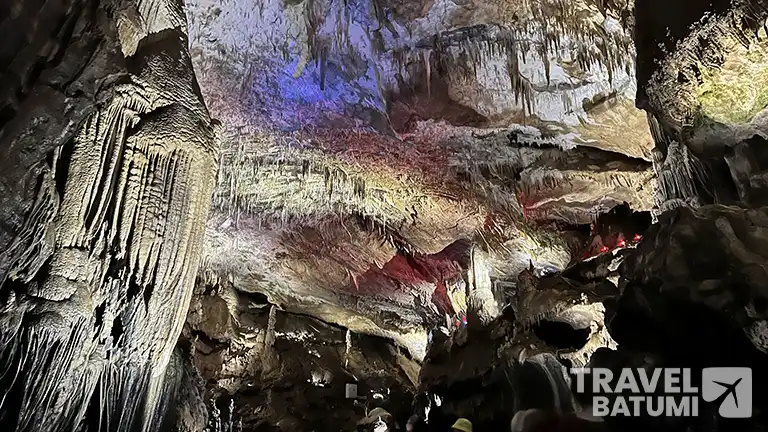
- Prometheus Cave - one and a half kilometres of illuminated underground halls, an hour's drive from the spring.
- Nokalakevi Fortress (Archaeopolis), 3 km down the Tekhura - ruins of a city that archaeologists link to legendary Colchis; worth a half-hour stop on the way to the spring.
Tips for the Trip
- Bring beach slippers or aqua shoes: the bank is pebbly, and in places genuinely hot rivulets run over the stones.
- A change of clothes and a bag for wet things are a must: sulfur water has a persistent smell and can ruin upholstery, so do not get into a car in a wet swimsuit.
- Towel, water and a snack come with you: there is nothing to buy on site.
- You can come all year round. In winter bathing is even better, the water keeps you warm, and the steam over the river makes the scene look like a Georgian Iceland. In spring and after heavy rain the Tekhura rises and can flood the pools by the bank.
- Warn your family that you will be out of reach: there is almost no signal at the spring.
- On weekday afternoons it is quieter; at weekends local families from Senaki and Martvili arrive towards the evening.
Our group trips here run with a driver and a guide: while one handles the road, the other keeps track of bathing times and helps the group, and the question of getting back with no internet never comes up.
Frequently Asked Questions
How much does the Nokalakevi hot spring cost?
Entry is free. Only the facilities are paid: a balneological bath is 5 GEL for 20 minutes, the toilet and the changing room are 1-2 GEL each. Bring cash, there are no card terminals.
Can you bathe in the spring in winter?
Yes, the spring works all year round, and winter bathing is what people love most: the water keeps you warm in any weather. The main thing is warm dry clothes for afterwards and a towel.
How hot is the water?
At the borehole it is 60-80°C, and the jets are noticeably hotter than the baths. Look for a comfortable temperature in the equipped baths or in the natural hollows by the river, where the thermal water mixes with the river water.
Are there cafes or shops nearby?
No, the nearest food is in Senaki and Martvili. Bring your own water and snacks, and take your rubbish back with you.
Is there mobile signal at the spring?
Almost none, even with a local SIM. Ordering a taxi through an app on site is unlikely to work, so arrive with your return transport arranged: a transfer with waiting time, your own car or a tour.
How do I get to the spring from Batumi?
About 130 km and 2.5-3 hours: the highway towards Poti and Senaki, then the road to Nokalakevi along the Tekhura river. Without a car the easiest options are a tour from Batumi or a transfer with waiting time; coordinates for the navigator are 42.365803, 42.195395.
Nokalakevi is hot water under the open sky, a cold river two steps away and a gorge where your phone gets no signal, which these days counts as a treatment too. Book a trip with a bathe in the spring in advance: in season the groups that combine the canyon, the cave and the hot water fill up first.