The Ali and Nino statue is the best-known modern symbol of Batumi: two eight-meter steel figures on the seafront slowly move toward each other, merge into one and drift apart again. A full cycle takes about ten minutes, and it retells the whole love story from the novel that gave the sculpture its name. Here is where the moving statue came from, when to come for the best shots and what to see nearby.
Table of contents
Why the Ali and Nino Statue Is Famous
Kinetic sculptures of this scale are rare anywhere in the world, and the one in Batumi is among the most recognized. Its author, Georgian sculptor Tamara Kvesitadze, first showed the work at the 2007 Venice Biennale under the title "Man and Woman". Later the composition was installed on the Batumi seafront, took its new name from the novel "Ali and Nino", and the steel couple has since spread to magnets, postcards and the covers of Georgia guidebooks.
The figures are built from horizontal steel plates with gaps between them, so by day you can see the sky and the sea through the silhouettes, and after dark the lighting fills them from inside. Seeing the statue is free at any hour: it stands in the open air and moves around the clock.
This pair is included in top 20 main attractions in Batumi.
The Story Behind the Sculpture
The novel "Ali and Nino" was published in 1937 under the pen name Kurban Said, and scholars still argue about who wrote it. It is a love story set against the First World War: Ali, a Muslim from Baku, and Nino, a Georgian princess, try to stay together in a world that is falling apart. The ending is bitter, Ali dies defending Baku.
The sculpture retells this story in the language of mechanics. Ali and Nino walk slowly toward each other, meet, become a single whole for a moment, then pass through one another and part in opposite directions. The steel plates are arranged so that the figures literally penetrate each other without touching. It is hard to imagine a better metaphor in public art for "together, but not forever".
How the Statue Moves and When to Come
The mechanism runs non-stop, and a full cycle from approach to parting takes roughly 8-10 minutes. The movement is slow and silent: walk past without stopping and you may not notice it at all, so give it at least one full cycle. The moment when the figures pass through each other is the scene people bring their cameras for.
The best time is after sunset. The lights come on, the silhouettes change color, and the Ferris wheel glows behind the figures. On summer evenings it gets crowded: the queue for photos stretches along the parapet, so come with a tripod closer to full darkness or at dawn, when the seafront is empty and all you hear is the sea.
Where It Is and How to Get There
The statue stands in Miracle Park, at the northern end of the seaside boulevard by the port, next to the Ferris wheel and the Alphabet tower. From anywhere in the center it is an easy walk along the sea; from Europe Square the stroll takes 10-15 minutes. City buses stop near the port, and from there it is a two-minute walk along the waterfront.
A good way to see the statue in the context of the city is a guided walk along the Batumi boulevard: the route passes through Miracle Park, and along the way you learn how a fishing town turned into a resort with kinetic sculptures. Another angle is from the water: on a yacht trip along the Batumi coast Ali and Nino appear against the whole panorama of the city, and it is the only way to shoot them with the skyline lit up behind.
What to See Nearby
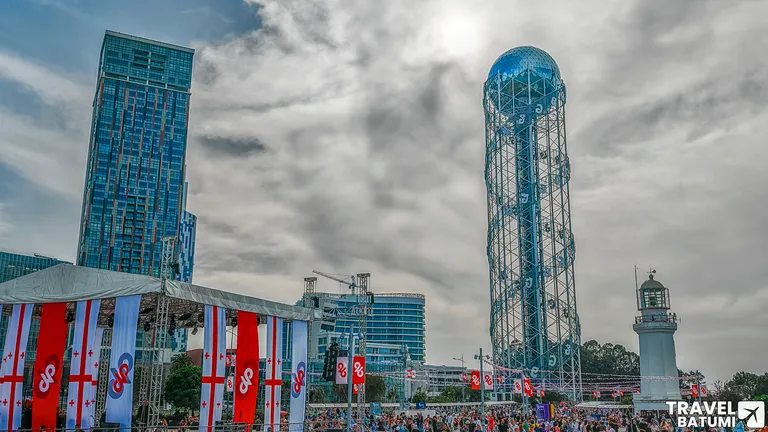
- The Alphabet tower, two minutes away: 130 meters tall, with a glass-floor viewing deck at the top.
- The Ferris wheel - the classic shot with the statue in the foreground is taken right from its foot.
- The seaside boulevard, seven kilometers of promenade with fountains, bars and a bike lane.
- Europe Square with its astronomical clock and the Medea statue, 15 minutes on foot. More about it on the Europe Square in Batumi page.
- The old town with its eclectic facades and courtyards, a logical place to start the day: the walking tour of Old Batumi ends right by the sea.
Tips for Visiting
- Allow 20-30 minutes: one full cycle of movement plus photos from different points.
- For video, shoot from the side, along the parapet line: that angle shows the figures passing through each other. A frontal view hides it.
- The statue is just as good in winter and the off-season: the lights work year-round and the seafront is nearly empty.
- The boulevard is best covered on two wheels: you can rent a bike or a scooter via BikesBooking and ride all seven kilometers of the promenade with the statue as the finale.
- If you want to stay within walking distance of the boulevard and Miracle Park, seafront hotels are easy to find on Booking.com, most take bookings without prepayment.
The statue itself needs no guide, but it sounds stronger woven into the stories of the old town. Travel Batumi guides are locals who remember the seafront before Miracle Park existed and know where to stand so the frame holds the figures, the wheel and the sunset at once. The full list of city routes is on the excursions to the Ali and Nino statue page, and ideas for a full day are collected in what to see in Batumi in 1 day.
Frequently Asked Questions
When does the Ali and Nino statue move?
Around the clock, with no schedule: the mechanism runs continuously and a full cycle takes about 8-10 minutes. There is no "showtime" to catch, just wait a few minutes by the statue.
How much does it cost to visit?
Nothing. The statue stands in the open Miracle Park on the seafront, and you can watch it for free at any time of day, with no tickets and no fences.
Why is the statue called "Ali and Nino"?
After the novel by Kurban Said about the love of Ali, a Muslim, and Nino, a Georgian princess. Tamara Kvesitadze's work was originally titled "Man and Woman" and took the heroes' names in Batumi.
When is the best time to photograph the statue?
After sunset, when the lighting comes on and the Ferris wheel glows behind the figures. For shots without people, come at dawn: on summer evenings a queue for photos forms along the parapet.
Do the figures really pass through each other?
Yes, that is the main trick: the figures are built from steel plates with gaps, and when they meet, the plates of one slide into the gaps of the other. The merging moment lasts less than a minute per cycle.
Ali and Nino is that rare sight with a plot, motion and the sea in the background all at once. Add the statue to your evening walk along the seafront, and book a city tour with a local guide in advance, in season the popular time slots go fast.