Georgian Wine: Semi-Sweet and Dry Wines, Names and Grapes
Verified: November 2026
Which Georgian wines are semi-sweet and which are dry, what the names on the label mean, what wine costs in Georgia and how to get bottles home
The best-known semi-sweet Georgian wines are the reds Kindzmarauli, Khvanchkara and Akhasheni and the white Tvishi: their sweetness is the grapes' own sugar, as their rules require. The dry ones include Mukuzani, Tsinandali, Napareuli and dry Saperavi. Georgians make wine two ways: the European way in steel tanks and barrels, and in qvevri - clay jars buried in the ground. Below: a table of names with sweetness and grape, how "Alazani Valley" differs from Kindzmarauli, shop prices and how to get bottles home.
Semi-sweet Georgian wines
Names like Kindzmarauli or Khvanchkara are not brands but places of origin. The National Wine Agency keeps the list and sets, for each, the grape, the area and the sweetness. Semi-sweet under these rules means 18 to 45 grams of sugar per litre.
- Kindzmarauli - red, from Saperavi, vineyards around Kvareli in Kakheti. The name most people mean by Georgian semi-sweet red.
- Khvanchkara - red from the Aleksandrouli and Mujuretuli grapes, only from the Ambrolauri district of Racha. It is sweeter, 30-45 grams per litre, and usually pricier.
- Akhasheni - red from Saperavi, the middle Alazani valley.
- Tvishi - white from Tsolikouri, the villages of Tvishi and Alpana in Lechkhumi.
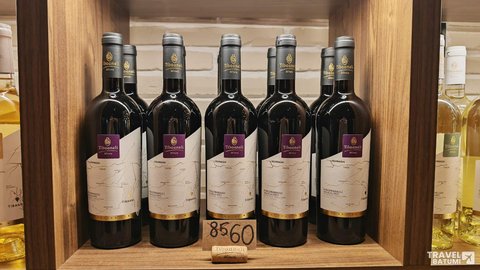
"Alazani Valley" and "Pirosmani" on a label are not places of origin - they are not on the agency's list. They are trade names, usually a semi-sweet white or red. Easy table wine, but with no rules on grape or place, so the taste varies from bottle to bottle.
Dry Georgian wines
Dry means up to 4 grams of sugar per litre. Dry reds are mostly Saperavi, the most widely grown grape of Kakheti: Mukuzani, Kvareli, Napareuli; "Saperavi" on a label is the grape, not a place.
White Georgian wines
Dry whites are Tsinandali (Rkatsiteli with Mtsvane), Gurjaani and Vazisubani from Rkatsiteli, and Manavi from Mtsvane. The one semi-sweet white with a place of origin is Tvishi, from Tsolikouri. Kisi is a white grape of Kakheti: Kisi Magraani is dry by its rules, white or amber; there is no semi-sweet Kisi among the places of origin.
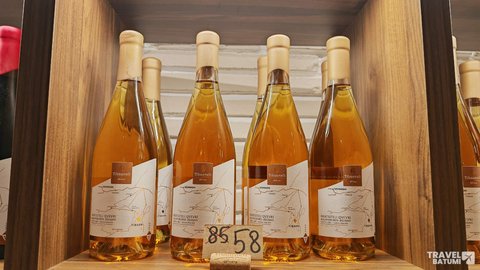
Amber wines, also called orange, are a group of their own: white grapes fermented with the skins and seeds, usually in qvevri, give an amber colour, a fuller body and a light grip. Tibaani and Kisi Magraani are made this way.
| Name | Colour | Sweetness | Grape | From |
|---|---|---|---|---|
| Kindzmarauli | red | semi-sweet | Saperavi | Kvareli, Kakheti |
| Khvanchkara | red | semi-sweet | Aleksandrouli, Mujuretuli | Ambrolauri, Racha |
| Akhasheni | red | semi-sweet | Saperavi | Alazani valley, Kakheti |
| Tvishi | white | semi-sweet | Tsolikouri | Lechkhumi |
| Mukuzani | red | dry | Saperavi | right bank of the Alazani, Kakheti |
| Napareuli | red or white | dry | Saperavi or Rkatsiteli | Telavi district, Kakheti |
| Tsinandali | white (also red) | dry | Rkatsiteli and Mtsvane | Telavi district, Kakheti |
| Manavi | white | dry | Mtsvane | Sagarejo, Kakheti |
| Tibaani | amber | dry | Rkatsiteli | right bank of the Alazani, Kakheti |
| Kisi Magraani | white or amber | dry | Kisi | Akhmeta district, Kakheti |
How wine is made in Georgia: qvevri and the European method
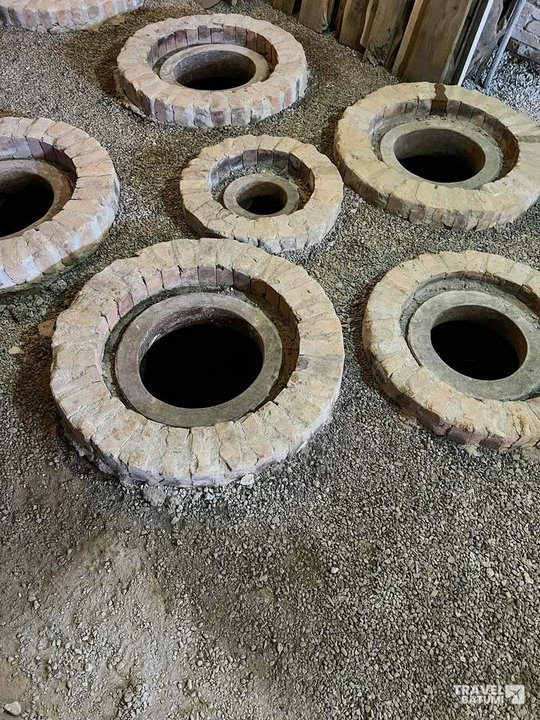
A qvevri is an egg-shaped clay jar buried in the ground. Wine ferments in it for several months, often with the skins and seeds. In Kakheti all the pomace goes in, which gives amber whites; in Imereti the jar is called "churi" and less pomace is used, so the wine is lighter. The method has been on the UNESCO intangible heritage list since 2013. The European method ferments without skins in steel tanks and ages wine in barrels; most bottles in shops are made this way.
In Georgia wine is drunk at the table, to the toasts of the tamada: see how a feast works in our article on the Georgian supra.
Regions and grapes
The National Wine Agency divides the country into six zones: Kakheti, Kartli, Imereti, Racha-Lechkhumi, the Black Sea zone (Guria, Samegrelo, Abkhazia, Adjara) and Meskheti. Kakheti leads: most places of origin are there, with vineyards in the Alazani and Iori valleys at 400-700 m.
- white grapes: Rkatsiteli, Mtsvane Kakhuri, Kisi, Khikhvi (Kakheti), Tsolikouri, Tsitska, Krakhuna (Imereti), Chinuri (Kartli);
- red: Saperavi (grown across the country), Aleksandrouli and Mujuretuli (Racha), Tavkveri and Shavkapito (Kartli), Chkhaveri (Guria and Adjara).
Kakheti is reached from Tbilisi: Telavi, the regional capital, is about 2 hours by road. You can compare English-language Kakheti wine day trips from Tbilisi.
To travel on your own, book a car with a driver from Tbilisi to Telavi and pay in cash and choose the wineries yourself.
Where to taste wine in Batumi
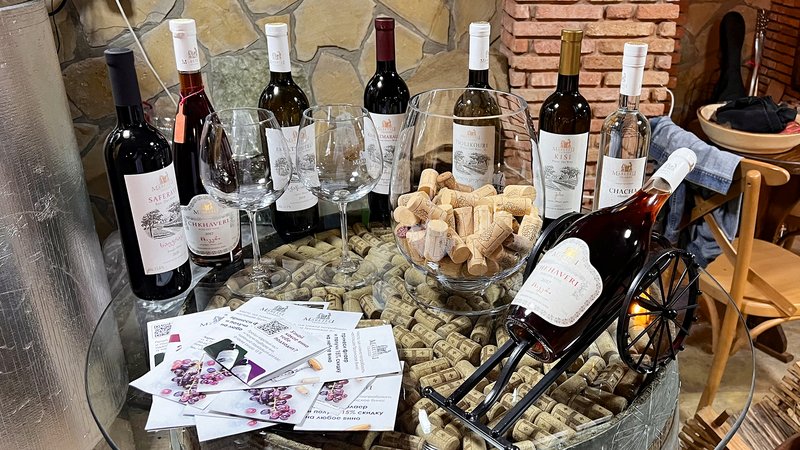
In Batumi itself there is a tasting in a wine cellar: a sommelier hosts it in Russian, with a cheese plate, 35 GEL per person, and you can buy the wines you like. The cellar also pours a local wine - a Chkhaveri rosé: Chkhaveri is the grape of Guria and Adjara, the last to be picked.
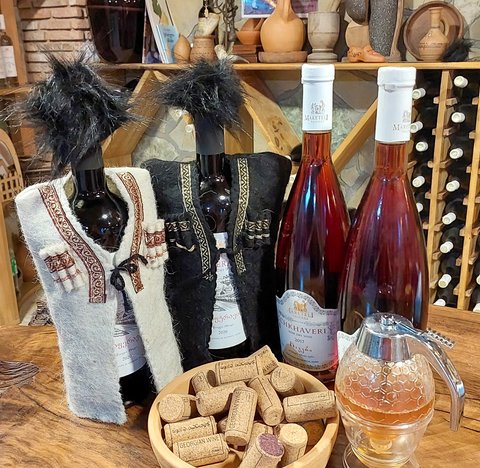
For a day out, take the wine tour: waterfalls and bridges on the way into the Adjara mountains, and a winery of your choice - the KTW winery in Keda or the traditional Tamazuri winery with qvevri and a cellar, also in the Adjara mountains not far from Batumi. In autumn Keda hosts an autumn and wine festival, and wine in Georgia always comes with food - see our guide to Georgian cuisine.
In Imereti, in Tskaltubo, the Kera winery has a museum in its yard and makes its own Saperavi and Rkatsiteli. Our day trips from Batumi to Prometheus Cave stop there.

To compare tastings and wine tours from Batumi by price and time, see Wine and tastings.
What wine costs in Georgia
As a guide, one online wine shop's prices in November 2026 for a 0.75 l bottle: Kindzmarauli 28-35 GEL, Khvanchkara 40-80, Tvishi 50-60, dry Saperavi 25-72, Tsinandali about 24. Rare qvevri wines run to 150-185 GEL, and in a restaurant or at a winery the same bottle costs more. Homemade wine is sold at markets and small shops from 15 GEL for a plastic bottle; quality varies, so taste first.
Rtveli and wine festivals
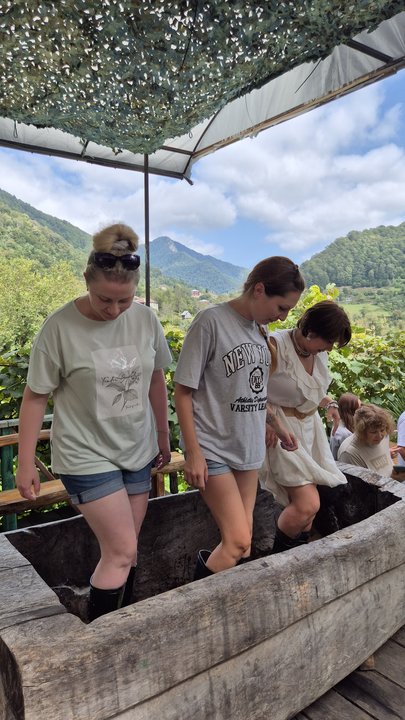
Rtveli is the grape harvest: from September in Kakheti to December, when Chkhaveri in Guria and Adjara is picked last. The easiest way to join is through a winery or a tour: from Batumi in season you go to a farm, pick grapes, tread them and sit down to a shared table. How to combine rtveli with the seaside - in our article on Batumi in autumn.
In spring Tbilisi holds the New Wine Festival, usually on the second Saturday of May in the park on Mount Mtatsminda, where wineries pour the new vintage. Early October brings Tbilisoba, the city festival.
How to take wine home
Georgia's Revenue Service site lists no separate export limit for wine: the limits come from the country you travel to and your airline, so check its allowance before you fly. On a plane, wine goes in checked baggage - liquids in hand luggage are limited to 100 ml containers, except sealed duty-free bags. Wrap bottles in clothes or ask the shop for a bottle box.
Frequently asked questions
Which Georgian wines are semi-sweet?
The reds Kindzmarauli, Khvanchkara and Akhasheni and the white Tvishi: their sweetness is set by the rules of the place of origin. "Alazani Valley" and "Pirosmani" are usually semi-sweet too, but they are trade names, not places of origin.
Which Georgian wine should I bring home?
Kindzmarauli or Khvanchkara if you like semi-sweet, Mukuzani or Saperavi for a dry red, Tsinandali for a white. To show the traditional method, take an amber qvevri wine.
How much does wine cost in Georgia?
In a shop a bottle of Kindzmarauli is about 28-35 GEL, Khvanchkara 40-80, dry Saperavi from 25. Homemade wine at the market starts at 15 GEL for a plastic bottle.
What is qvevri wine?
Wine fermented and aged in a clay jar buried in the ground, often with the skins and seeds. White qvevri wine is usually amber in colour with a firm taste. The method has been on the UNESCO intangible heritage list since 2013.
Which Georgian white wines should I try?
Dry: Tsinandali, Gurjaani, Vazisubani, Manavi and Kisi Magraani; semi-sweet: Tvishi from Tsolikouri. Amber whites such as Tibaani ferment on the skins in qvevri.
Written and checked by the Travel Batumi team →