Ureki beach is the only place on the Georgian coast where fine black magnetite sand replaces the usual pebbles. People come here for two things: the gently sloping shallows that make Ureki Georgia's most child-friendly resort, and the sand itself, which is credited with healing properties. Here is what is true in all that, when the season runs and how to get there from Batumi.
Table of contents
What Makes Ureki Beach Special
Ureki is a village in Guria, 50 km from Batumi, that grew up around a black-sand beach. In Soviet times the resort was called Magnetiti, and people were sent here for climate therapy from across the Union; some of the sanatoriums of that era still operate. Today it is a family resort with guesthouses, beachside cafes and a crowd that comes for the sea and the sand rather than nightlife.
The beach strip runs for about five kilometers and merges into the beaches of Shekvetili. Access is free, you only pay for beach facilities, and the prices are listed in a separate section below.
Magnetic Sands is an item on the "outbound" part of the what to see in Batumi list.
The Magnetic Sands: Why They Are Black
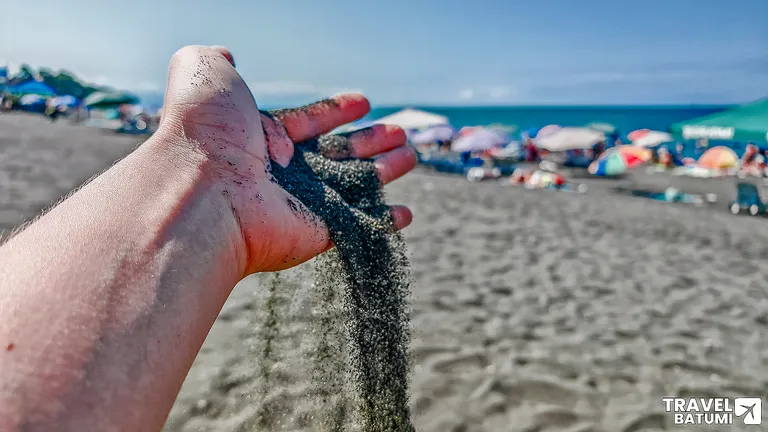
The color comes from magnetite, an iron-bearing mineral that rivers have been carrying down from the Lesser Caucasus for millennia. The surf sorted the heavy black grains from the light ones, leaving a band of dark beach with a high share of magnetite. You can test it with a souvenir magnet: hold it over dry sand and the grains rise toward it in a little "beard".
The black color has a practical consequence too: the sand heats up more than light sand, and at noon in July it is genuinely hot underfoot. In return the beach holds warmth long into the evening, and walks after sunset here are especially pleasant.
The Health Claims: What Is Known
Ureki's resort legend is built on the healing effect of a weak magnetic field: warm sand is piled on joints and backs, and children are sent to play on the beach "for prevention". In Soviet times magnet therapy was prescribed here for heart, musculoskeletal and nervous system conditions, and the resort keeps its health-focused reputation to this day.
To be honest about it: rigorous modern evidence for the healing effect of magnetic sand is thin, and magnet therapy has contraindications, from oncology to blood disorders. If you are coming specifically for treatment, talk to your doctor first. If you are coming to rest, the warm sand, shallow sea and iodine-rich air will do their work without any mysticism.
The Beach and the Sea: Shallows and Season
Ureki's main advantage for families is the seabed. The water deepens very gradually: you can walk out dozens of meters at waist depth, and the water near the shore warms up faster than on Adjara's pebble beaches. Children get free rein, adults have to take a walk to reach real depth.
The swimming season opens in late June and runs through September; the water stays comfortable into early October. July and August are the peak: hot, crowded, the sand scorching. Many consider September the best month: the sea is still warm, the sun softer, accommodation cheaper.
Beach Facilities: Prices
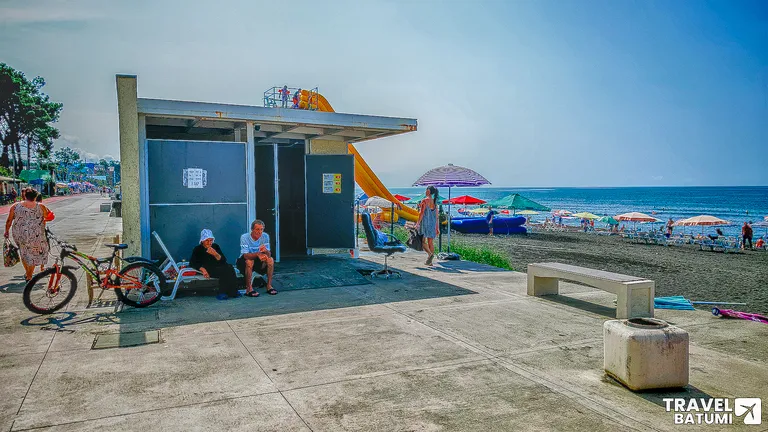
The beach itself is free, but almost every facility on it is paid. The prices are modest and in the 2026 season look like this:
| Service | Price |
|---|---|
| Toilet | 1-2 GEL |
| Changing cabin | 1-2 GEL |
| Shower | 1-2 GEL |
| Sunbed | 10-15 GEL |
| Umbrella | 10-15 GEL |
Small cash makes a beach day much easier: the beach vendors rarely have card terminals. A sunbed with an umbrella for two comes to 20-30 GEL a day, cheaper than on Batumi's central beaches. In season the beach is lined with cafes and stalls selling corn and churchkhela, plus water activities from banana boats to jet skis.
Where It Is and How to Get There
From Batumi
About 50 km north along the highway. Minibuses from the bus station take about an hour and cost around 10 GEL, and in summer some run right to the beach. Trains work too: Ureki station sits on the Batumi - Ozurgeti line, a traffic-free option at the height of the season. A taxi from Batumi costs noticeably more but takes 40-50 minutes.
If you want to combine the beach with sightseeing, the combined day trips are convenient: the tour with Martvili Canyon, hot springs and Ureki covers nature and swimming in one day, while the route with Prometheus Cave, Tskaltubo and Kutaisi adds underground halls and Soviet sanatoriums to the beach. All the options are on the excursions to the magnetic sands of Ureki page.
By car
The road is simple: the Batumi - Poti highway, the Ureki turnoff, then a couple of kilometers to the sea. Parking near the beach is paid in season. For trips along the coast and into Guria it is convenient to rent a car via Localrent or with a driver and all-day waiting with GoTrip: detours to the dendrological park or Guria's tea plantations do not work with a minibus.
What to See Nearby
- Shekvetili Dendrological Park 10 minutes away: sequoias, hundreds of tree species and peacocks roaming free.
- Musicians Park next to the dendrological park - seaside alleys with bronze figures of musicians.
- Tsitsinatela amusement park, the evening option with a Ferris wheel and rides, open in summer.
- The tea plantations and villages of Guria, if you want to see the region beyond the beach.
A beach day easily turns into a full route: the trip with the hilltop Sameba temple, the dendropark, Petra fortress and Ureki sands gathers the coast's main points into one day with a swim at the end.
Tips for Your Ureki Trip
- Bring beach slippers: at noon the black sand heats up so much that only the bravest run to the water barefoot.
- An umbrella or a canopy is a must, there is almost no natural shade on the beach.
- With small children, watch the sun on the shallows: ankle-deep water keeps a child busy for hours, and sunburn here sneaks up unnoticed.
- White swimwear and light clothes part with black sand reluctantly, keep that in mind when packing.
- Beachfront accommodation for July and August goes early: Ureki hotels and guesthouses are easy to book on Booking.com, most take bookings without prepayment.
Ureki features in several Travel Batumi routes, and that is a handy way to meet the resort: canyons or caves before lunch, sands and the sea after, with local guides and a separate driver handling the road and the logistics.
Frequently Asked Questions
How is Ureki beach different from the beaches of Batumi?
In two ways: black magnetite sand instead of pebbles, and gently sloping shallows. The water near the shore is warmer and the entry is soft, which makes it easier with children than on Adjara's beaches.
Is it true that the Ureki sands heal?
The sand really does contain magnetite and creates a weak magnetic field, which Soviet resort medicine at Magnetiti was built on. Rigorous modern studies of the effect are scarce and magnet therapy has contraindications, so discuss any treatment hopes with your doctor.
When is the best time to go to Ureki?
For swimming, from late June through September. The peak is July-August, and the most comfortable month is September: the sea is warm, the sand no longer burns, accommodation is cheaper and easier to find.
Is Ureki good for holidays with small children?
It is the coast's main family resort: dozens of meters of shallows, warm water and sand instead of stones. Just watch the sun, children burn quickly and unnoticed in shallow water.
How do I get to Ureki from Batumi without a car?
By minibus from the bus station, about an hour and around 10 GEL, with some summer services running to the beach itself. The second option is the train to Ureki station, free of traffic in high season. Easier still is a combined day trip that includes the sands.
Are there cafes and sunbeds on the beach?
Yes, in season there are cafes, water activities, paid toilets, showers and changing cabins at 1-2 GEL, and sunbeds and umbrellas at 10-15 GEL. Out of season the facilities close, but the beach stays open for walks.
Ureki is a sea made for children, sand with a magnet trick and evenings when the beach stays warm until dark. Book a day trip with a swim at Ureki in advance, in midsummer the combined routes fill up fast.